Wireless providers Verizon and T-Mobile are being accused of fudging numbers, or boasting a bit too much, regarding their reach and speed of broadband internet access, according to the federal Broadband Equity, Access, and Deployment Program.
With this comes significant unintentional consequences for countless rural communities.
President Biden announced $42.5 billion in federal funds through The Broadband Equity, Access and Deployment Program to expand internet access to previously neglected areas and narrow the digital divide.
This program will make high-speed internet affordable and available in America.
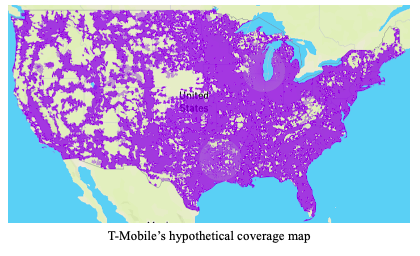 However, the overly optimistic coverage maps from Verizon and T-Mobile may be exceedingly problematic for many regions that seek to benefit from those federal funds. Regions seen as having strong coverage on providers’ coverage maps won’t benefit from any of the federal expansion program funds.
Roughly 30 million Americans live in areas in which service is spotty or non-existent, yet are still included on those providers’ coverage maps.
T-Mobile’s coverage maps claim they serve 114 million addresses, while actual data shows the number of eligible addresses is roughly only 50 million. 64 million is a massive discrepancy.
There are also glaring disparities between what the service providers are reporting and what state governments report. In Virginia, more than 1.6 million households supposedly receive broadband that appear on provider’s lists but not the state’s.
Lawmakers from vulnerable states including Nevada, Vermont, Texas, Maine, and Virginia are calling for service providers to conduct necessary reviews and immediately redraw their maps to reflect the true, actual coverage instead of hypothetical, before federal funds are distributed based upon those maps.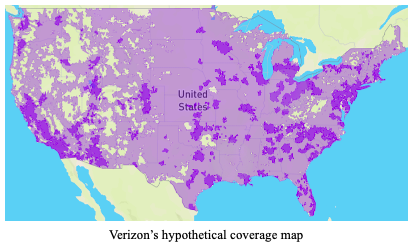
In Nevada alone, there were 20 thousand addresses that were falsely listed as receiving broadband internet.
Nevada Senator Jacky Rosen argued that “refusing to allow time to fix flawed maps will disproportionately impact funding that states like Nevada get for broadband infrastructure, and could result in our state losing out on millions of dollars.”
As internet access becomes more of an everyday necessity, the accuracy coverage maps from wireless providers matters greatly.